
Cost & Value · 6 min read
Stage or Sell Empty?
Empty feels neutral. On a phone screen, it rarely is. Here is what actually happens to a vacant listing, and how to decide.

By Johanna French, owner and head stager
Grove Run Road | Commercial Point
Is it better to stage a house or sell it empty? Sellers who have already moved out often lean toward empty. The house is clean, it is neutral, buyers can “use their imagination.” It sounds sensible. In our experience, it is also the moment most listings lose their warmth.
Here is what an empty house actually communicates, when selling it empty can be reasonable, and what a middle path looks like.
What empty rooms do to a listing
They look smaller, not bigger
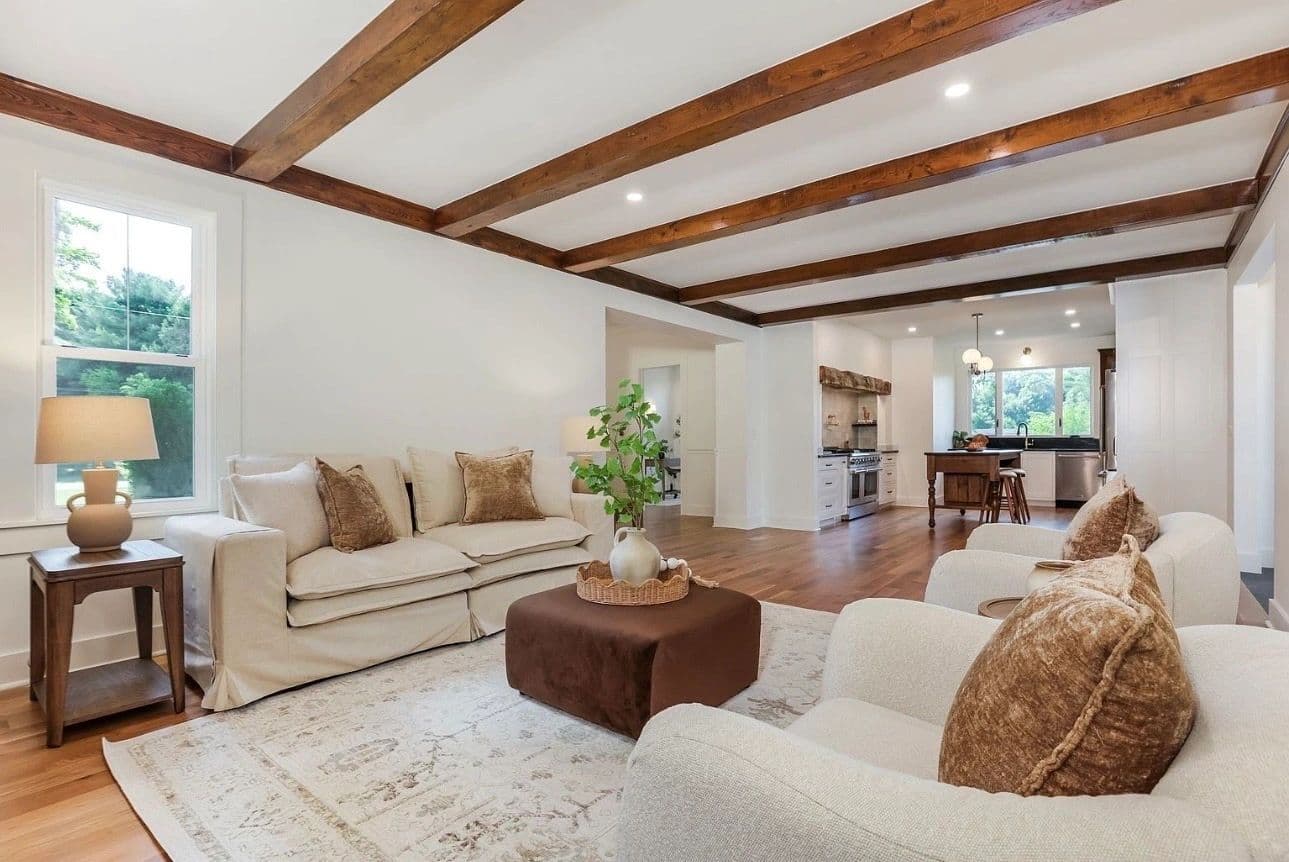
It is counterintuitive, but a bare room gives the eye nothing to measure against. Without a sofa or a bed for scale, buyers cannot tell whether a room fits their furniture, and they tend to assume the worst. A well-scaled rug and seating group proves that the room works.
They all look the same in photos
Scroll through a vacant listing and you will see it: beige wall, window, beige wall, window. Rooms blur together. Nothing tells the buyer which one is the living room and which is the den, or why they should care.
They spotlight flaws
In an empty room, the only things to look at are the floor seams, the outlet covers, the patch on the wall. Furniture and art give the eye somewhere better to land.
They feel cold in person
Empty houses echo. Footsteps are loud, light feels harsh, and buyers move through faster. Soft textiles, lamps and a few living plants change how long people stay in a room, and how they talk about it afterward.
Is it better to stage a house or sell it empty? When empty can work
We are not going to pretend staging is the only option. Selling empty can be reasonable when:
- The house will almost certainly be bought for its land or as a full renovation.
- The likely buyers are investors who value a clean shell over styling.
- There is genuinely no budget for anything, and the house is spotless, freshly painted and full of natural light.
Even then, we would suggest a few inexpensive moves: matching bulbs in every fixture, clean windows, blinds opened to the same height, and at least one rug and chair in the main living space so the photos have scale.
The middle path: stage the rooms that carry the listing
Staging a vacant home does not have to mean furnishing every bedroom. We recommend focusing on the spaces with the biggest emotional pull:
- Entryway, because it is the first impression, in photos and in person.
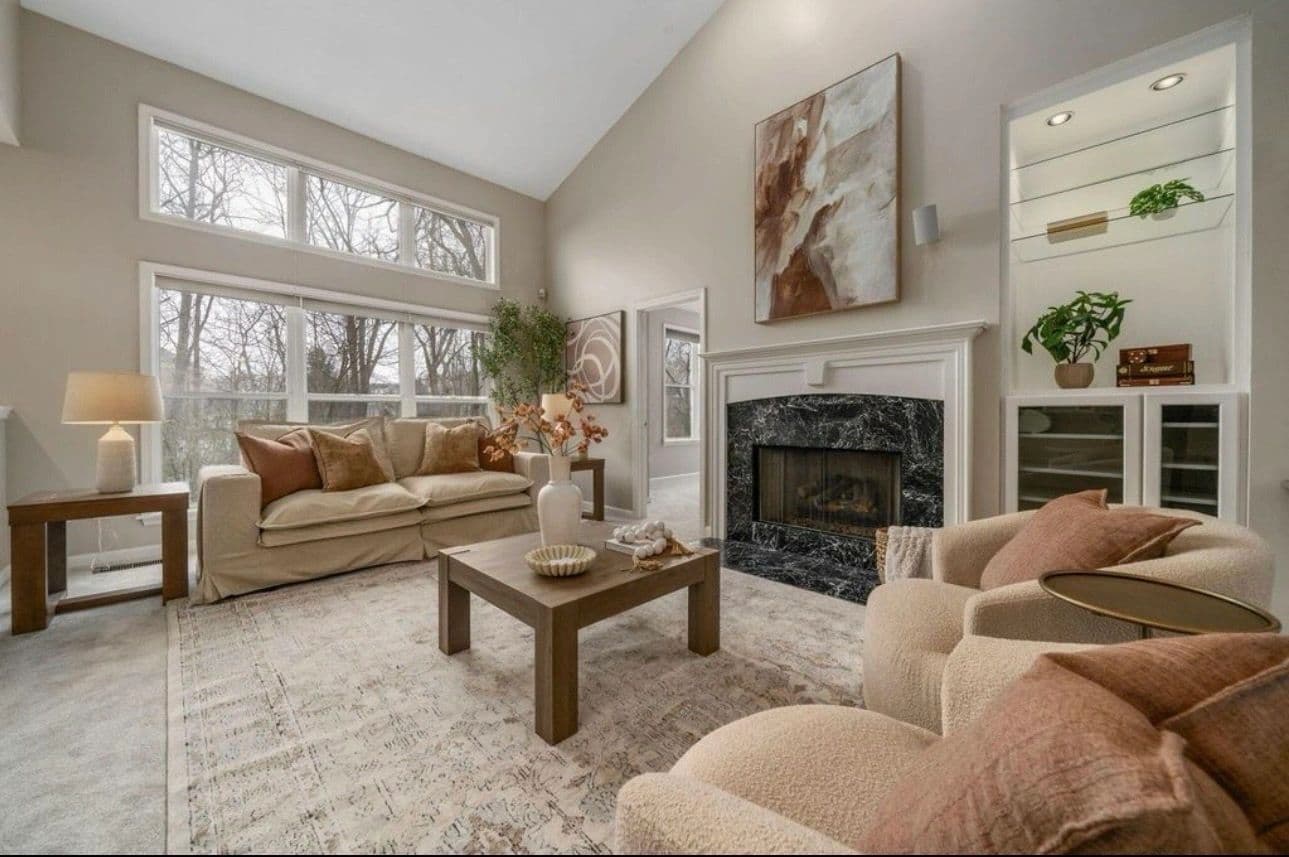
- Living room, where buyers decide whether they can picture their evenings.
- Dining room, which proves where the table goes and how many it seats.
- Kitchen, lightly styled so the counters and island read as usable space.
- Primary suite, the private retreat buyers are paying for.
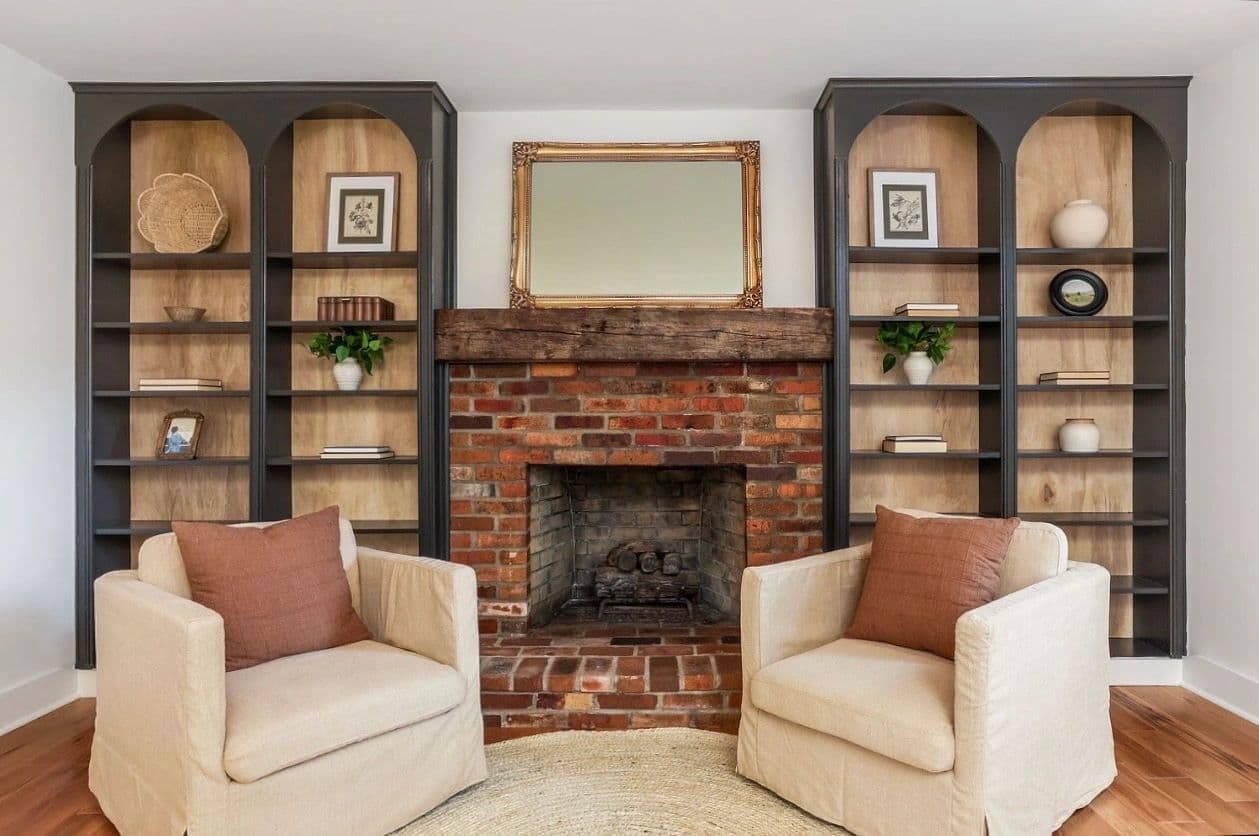
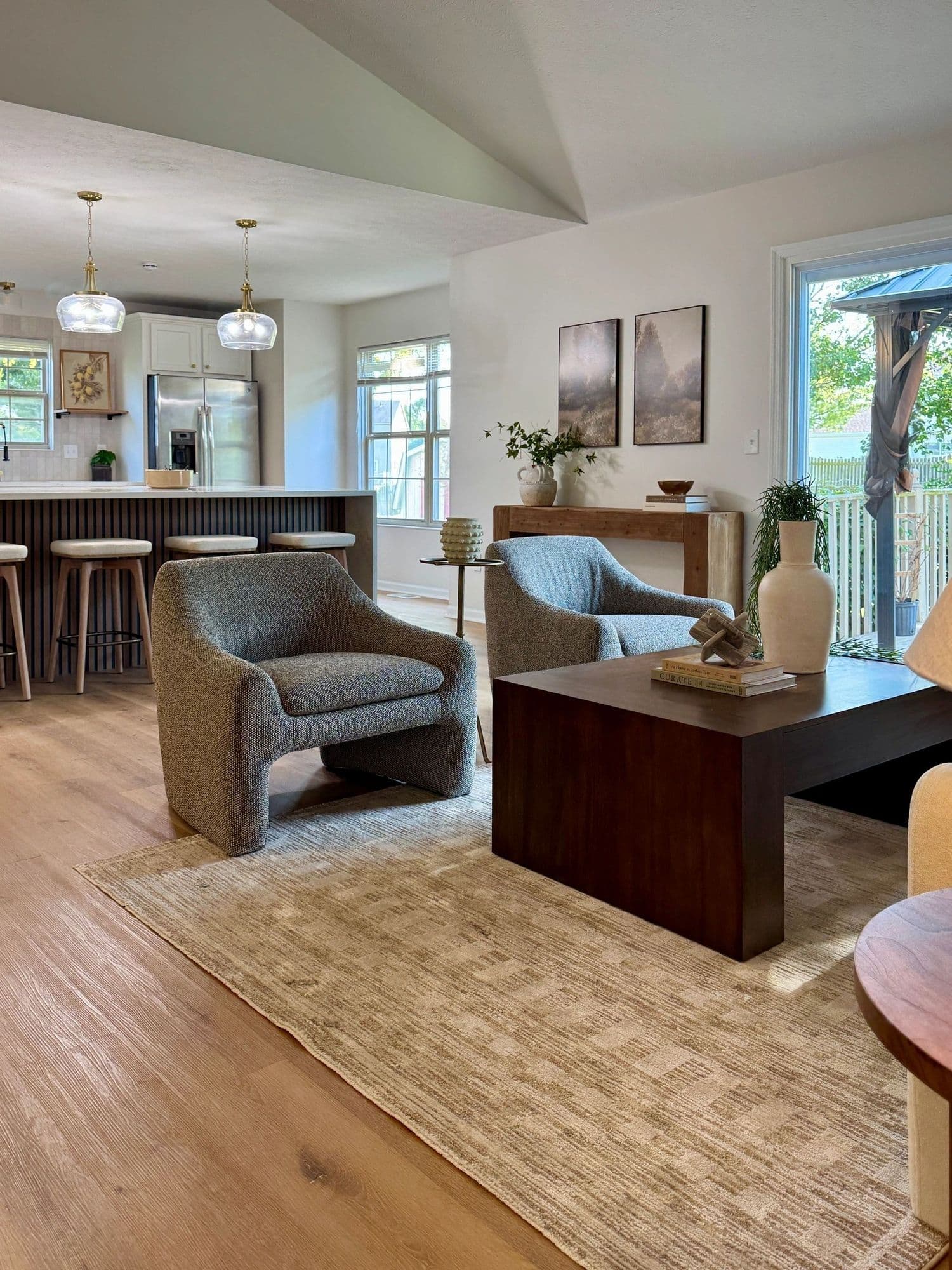
Secondary bedrooms can stay simple or empty, and we will happily stage any other space you ask for. The N 21st Street project in King-Lincoln shows why this matters in an open plan: a dining table and chairs placed beside the kitchen island define the eating area, a seating group around the fireplace defines the living room, and the mudroom bench by the door gets a coat, boots and baskets so buyers see how it would be used.
Still moving out? Think before the truck comes
If the house is not empty yet, you have a choice most sellers miss. Before the movers arrive, ask whether any of your own pieces could stay behind for the listing: a neutral sofa, a dining table, a good bed frame, a couple of lamps. Even a few well-placed pieces reduce how much needs to be brought in.
This works best when the pieces are simple, in good condition and scaled to the rooms. Anything worn, bulky or very personal is better on the truck. If you are unsure, a walkthrough before moving day is the cheapest time to decide, because nothing has to be carried twice.
What staging a vacant home looks like with us
After a free estimate, a team member visits the house to confirm measurements, check lighting and layout, and plan how furniture will get in (stairs, doorways, parking). That visit is where we prevent the classic mistakes, like a sectional that will not turn the corner or a dining table that crowds the walkway. You then get a final proposal.
Installation usually takes one to two days. We bring furnishings, art and decor, style each room around the home's features, and leave it ready for photos and showings. The standard term is 30 days, with extensions available if needed. Our vacant home staging page has the full details.
Weighing the cost
Staging is an upfront expense on a house you may already be paying to carry. That is exactly why an empty listing that lingers is costly too. The National Association of Realtors' Profile of Home Staging reports that staged homes tend to spend less time on the market, which is the number most vacant-home sellers care about. For the full picture, read Is Home Staging Worth It? and our breakdown of home staging cost in Columbus. If budget is the main worry, Staging a Vacant Home on a Budget is the practical companion to this post.
Tell us about your house and we will send a free estimate for the rooms that matter most.
The service behind this article
Vacant Home Staging →Full furnishings, art and decor for an empty house, focused on the rooms that sell. Installed in one to two days.